Blog | Planning | Development and Land
Key Planning Changes to be Aware Of

National Planning Policy Updates
As a further push to ‘get Britain building’ and achieve Labour’s manifesto pledge of delivering 1.5M homes this Parliament the government is progressing a significant revision to the National Planning Policy Framework (NPPF) following a consultation which closed in March 2026.
Key provisions within the consultation document include:
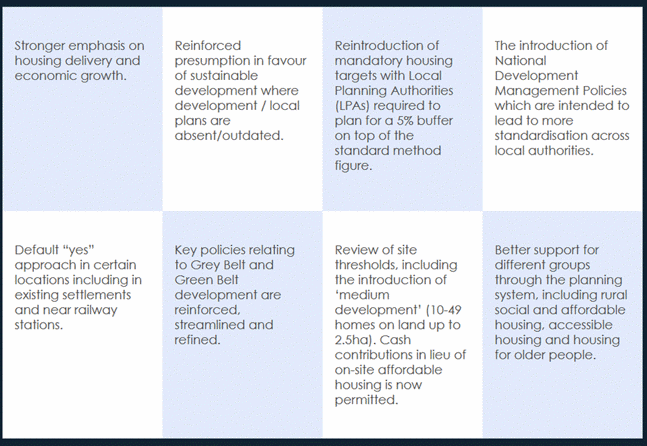
Key implications:
- There is a key message from the Government to move from delay to housing delivery.
- The changes give developers a more robust platform for challenging refusals particularly where LPAs are failing to deliver homes.
- Reduced scope for local development management policies. Increased standardisation will make cross LPA working easier for developers.
- Sites near to railway stations will benefit from enhanced policy support for higher-density development and make such sites more valuable.
- Greater flexibility for SME developers and an appreciation that small sites are often not suited to mixed tenure housing delivery.
- Greater certainty for developers, but potentially greater tension with LPAs.
For Development in London: The GLA Emergency Measures to Support Housing Building
Key Provisions:
- New temporary fast track planning route for schemes delivering more than 20% affordable housing.
- Removes requirement for detailed viability assessments upfront and simplifies and accelerates the decision-making process.
- Temporary CIL relief of up to 50% relief on brownfield site where affordable housing exceeds 20%.
- Temporary easing of planning standards including around density, dual aspect requirements and cycle parking provision.
Implications:
- Certainty and speed in exchange for lower affordable housing thresholds. With the average affordable housing provision across London already being significantly less than policy requirements, owing to existing viability challenges, there is concern that this does not go far enough.
- Directly improves viability to help unlock additional housing delivery.
- Greater scope to optimise the potential of sites and achieve higher housing numbers.
- Move towards more centralised, pro-delivery planning systems in London
- Easing of design standards are a welcome change particularly in the context of the requirement for second stair cores reducing development efficiency and viability. It is questioned why these design changes are only temporary.
In the context of rising development costs and a stagnating economic climate the Government is responding in an attempt to kick start development.
For further advice on how these changes impact you please get on touch.
Related Insights

Podcast: Planning Reform: Policy Changes Create New Opportunities
Discussions around key recent changes to planning policy, including the revised National Planning Policy Framework & consulta...

New National Planning Policy Framework - which changes create new development opportunities?
The new National Planning Policy Framework (NPPF) was published by the government on Monday, following the December 2025 draf...

Community Infrastructure Levy (CIL) Under Scrutiny: Appeal Rulings Open the Door to Repayment Claims
Recent Community Infrastructure Levy (CIL) appeal decisions are creating opportunities for developers and are leading to repa...

Allsop launches planning department with senior hire
We are delighted to announce the launch of a planning advisory service, further strengthening our integrated professional se...